Night City was built by hand as a place you want to stay in

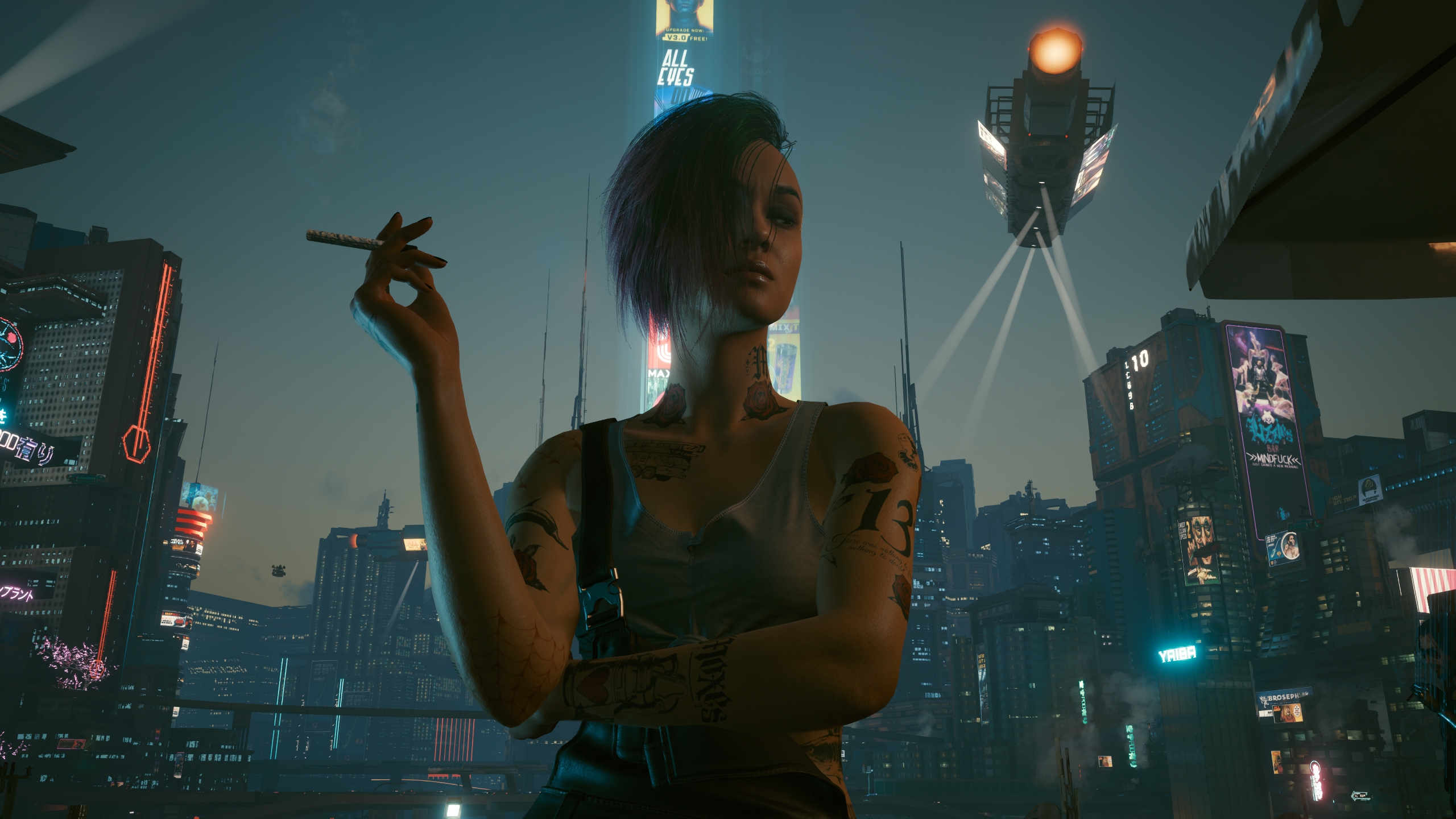
CD Projekt Red art directors Jakub Knapik and Kacper Niepokólczycki told 80.lv how Night City was assembled. The city was made almost entirely by hand: buildings, billboards, bins, sheets of paper on the sidewalk. Procedural tools were only a starting point, and only in places.
Knapik says the world was meant not as a backdrop but as a sandbox for another life: a car, music, a side quest, an apartment, the air. That, in his view, is why players come back just to spend time in the city. He ties the recognizability of Cyberpunk 2077 to the depth and boldness of that assembly.
Four layers of time set the look: 1980s retro-cyberpunk, 1960s plastic kitsch, corporate neomilitarism, and the pseudo-natural neokitsch of the rich. Contrast is at work almost everywhere. One example is a house in Rancho Coronado with an AV crashed into the roof: ordinary for residents, a blow for the player. Districts have their own colors and histories. Japantown grew from Japanese corporate expansion, the shore from warehouses and the port.
Ad density in places turned into noise. Phantom Liberty introduced rules for grouping color, shape, and empty space. Dogtown came out more detailed and quieter. The move to first person forced a recount of level metrics, prop density, and architectural scale.
The interview explains why the city feels assembled rather than generated.
Commentaires
Personne n'a encore écrit. Sois le premier — pose une question ou dis ce qui a marché.
Connecte-toi pour laisser un commentaire